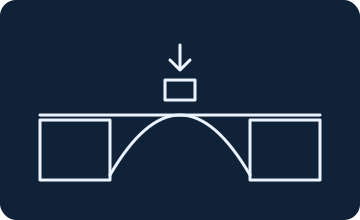
Ages 4-7 · child and adult
Paper bridge: which shape holds more?
The same paper, two shapes. Compare a flat bridge with a folded one, then try changing one thing.
Set your own pace. Preparation depends on your materials.
What to gather
- Two matching sheets of paper
- Two stable books of equal height
- One light, large block or a light toy car
Keeping it safe This miniature bridge is only for a light toy. Never stand on it. Avoid coins, sharp objects and heavy weights.
Choose a challenge level
Ages 4-5
The adult helps with folding. Your child chooses a prediction and watches how the paper bends.Ages 6-7
Try a different fold width on another matching sheet. Keep the gap and load the same. Draw what you found.Step-by-step instructions
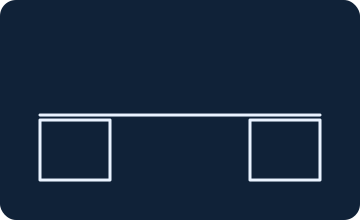
Place the books on a table with a small gap. Lay a flat sheet across it, supported well at both ends.
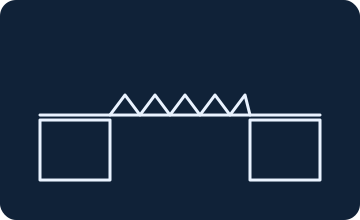
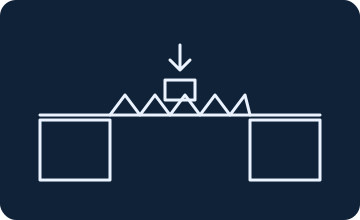
Fold the second sheet into an accordion. The long folds must run from one support to the other. Predict which shape will bend less.
Place the same light block in the middle of each bridge in turn. Keep the gap unchanged. Observe the difference and suggest one adjustment.
TATAAA
Now turn it into a game
Supply route: draw a house on each bank. Carry a light paper parcel across the bridge and add it to your cardboard city.
When it gets tricky
Did both bridges fall? Check the fold direction and how the paper rests on the supports. Reduce the gap, then compare both shapes again.
When an experiment goes wrongWhen you are done
Name a difference or one change for next time. A bridge does not have to stay up for you to discover something.
If your child does not want to continue, it is fine to stop. You can safely swap roles or adapt the rules.
What to notice
Folds change the paper's cross-section and can make it resist bending. The gap, fold direction and load also affect the result.