Ages 4-7 · child and adult
The three-clue trail
Turn a familiar walk into a search for three visible clues. Your child helps choose the next step.
Set your own pace. Preparation depends on your materials.
What to gather
- A familiar, safe route
- Observant eyes; no collecting needed
Keeping it safe Stay together on the path. Do not taste anything, touch droppings or unknown plants, or follow animals or strangers.
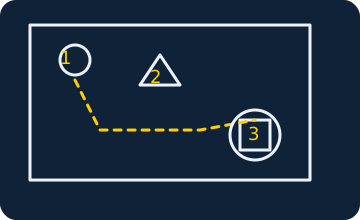
Choose a challenge level
Ages 4-5
One clue is enough. Your child can simply point, with no explanation needed.Ages 6-7
Find two similar objects and name one difference. Then let your child choose a new clue for the adult to find.Step-by-step instructions

Agree on three clues, such as a yellow leaf, rough bark and a round stone. The adult chooses a short, safe stretch.
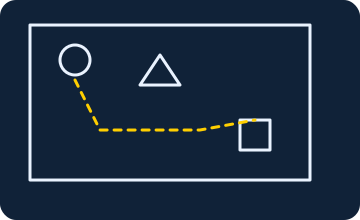
At each find, your child points out the feature that matches the clue. Compare it with another visible object.
The adult offers two safe landmarks within sight. Your child chooses where to look together next and explains why.
TATAAA
Now turn it into a game
Detective story: invent a story from three observed clues. Separate what you actually saw from what you imagined. Do not pick or remove anything.
When it gets tricky
Cannot find a clue? Swap it for something within sight. Do not guess an animal's direction or the age of a track without evidence.
When an experiment goes wrongWhen you are done
Each person names one find. You can finish the trail after the first clue.
If your child does not want to continue, it is fine to stop. You can safely swap roles or adapt the rules.
What to notice
The shared task is to observe and compare visible features. Imagination can add a story, but a guess remains a guess.
Keep exploring
 Head out on an adventure
Rain gauge: how much rain fell?
Put a straight-sided container outside and record the water level. Start your own weather journal.
Open mission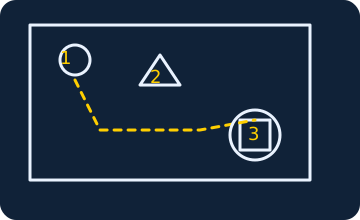 Head out on an adventure
A treasure map without reading
Three pictures can lead to treasure. Your child makes a map and the adult tries following it.
Open mission